
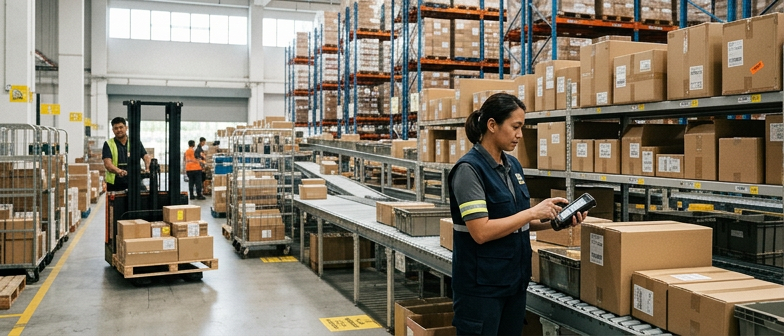
The Role of Warehouse and Logistics Management in Modern Supply Chains
Warehouse and logistics management coordinates how inventory is stored, handled, and moved so products reach customers and business partners reliably. Effective warehouse operation management aligns people, processes, and systems to control inbound receipts, storage, picking, packing, and dispatch. When this is integrated with wider logistics warehousing and distribution activities, companies balance stock availability with working capital, keep service levels high for B2B and omnichannel retail, and meet regulations on customs, safety, and product traceability. In markets with long supply lines and cross‑border trade, strong control of these flows shortens lead times, reduces variability, and protects revenue and brand reputation.
Modern warehouse business models sit at the centre of warehousing and transportation logistics, linking ports, plants, fulfillment hubs, and last‑mile carriers in a connected network. Data from transport, order, and warehouse systems guides where to position inventory, which facility should fulfill each order, and how to consolidate shipments to cut freight costs and emissions. As expectations shift toward fast delivery, real‑time visibility, and easy returns, facilities move from passive storage to active fulfillment engines that orchestrate inventory, support value‑added services such as kitting or labelling, and provide the operational backbone for resilient, scalable supply chains.
Designing Effective Warehouse Areas and Flows
Designing effective warehouse areas starts with mapping how storage goods move from receiving to final dispatch. Instead of treating the building as one large space, segment it into zones for long term storage, fast moving inventory, returns, and value added work such as kitting or labelling. The layout should minimise travel distance and crossings between people, pallets, and equipment. In a warehouse for storage and delivery services, keep quiet reserve locations clearly separated from dynamic staging zones close to loading docks so activity in one area does not disrupt the other.
Space allocation depends on the profile of the goods and the warehousing cargo service you provide. Bulky or heavy items need wider aisles, reinforced racking, and direct forklift access, while small, high value products fit better in dense shelving or bins near ergonomic picking stations. Temperature controlled inventory, bonded stock, and hazardous materials each require dedicated warehouse areas with specific compliance rules and controlled access. Matching each product family to the right zone and storage method improves pick accuracy, reduces damage, and makes cycle counting more systematic and predictable.
Once zones are defined, material flows should be designed as end to end paths that match your service promise. Inbound flows move from receiving and quality checks into storage locations without backtracking, while outbound flows run from reserve to forward pick faces, then to packing, consolidation, and dock doors aligned with carrier cut off times. Cross dock routes can bypass long term storage entirely for fast moving orders, reducing touches and dwell time and keeping storage capacity available for slower moving stock.
| Warehouse area type | Primary purpose | Main process focus | Impact on service level |
|---|---|---|---|
| Long-term storage zone | Hold slow movers and bulk stock | Space-efficient reserve storage | Stable availability, less congestion |
| Fast-pick zone near docks | Support quick order turnaround | High-frequency picking and short staging | Faster dispatch, shorter lead time |
| Returns and inspection area | Handle reverse logistics flows | Checking, sorting, disposition | Fewer errors, cleaner inventory records |
| Value-added services zone | Kitting, labelling, light assembly | Order customization and rework | More flexible offers, tailored deliveries |
| Cross-dock staging area | Bypass long-term storage | Direct transfer from inbound to outbound | Lower dwell time, higher responsiveness |
Storage, Picking and Value-Added Zones
Designing storage zones starts with understanding how different categories of goods move through the warehouse and support your service promise. Slow-moving or bulky storage goods go into high-density racking or a bulk area, freeing prime floor space near dispatch for fast movers. Temperature control, separation of regulated items, and secure cages for high-value stock all shape how you design a warehouse for storage and delivery services so inventory stays protected yet accessible.
Closer to the outbound docks, picking and value-added areas turn stored inventory into a dependable warehousing cargo service. Fast-pick locations follow clear slotting rules, ergonomic routes and visual cues so teams process small orders quickly, while a nearby value-added zone manages relabelling, kitting, light assembly and checks without disrupting core storage. Tight integration with the warehouse management system keeps flows from receiving to storage, picking and final customization fast and accurate.
Tools, Supplies and Technology for Warehouse Organization
Effective warehouse and logistics management starts with the right physical setup. Core warehouse organization supplies include shelving and racking that match product dimensions, durable totes and pallets, and standardized bins that make storage locations easy to identify. Clear aisle markings, barcode labels, and signage reduce picking errors and help staff navigate different warehouse areas. Mobile barcode scanners, pallet jacks, and ergonomic picking carts create a consistent workflow that supports accurate storage of goods and smooth handover to transport teams.
Digital tools from warehouse technology companies build on this foundation by giving managers visibility and control. Modern warehouse management systems connect receiving, put‑away, picking, packing, and shipping in one platform, often linked with transport and inventory planning. Cloud software and logistics online applications allow in‑house teams and third‑party partners to track orders and stock in real time across multiple sites. Automation such as conveyor controls, robotics, and smart sensors captures data at each step and enforces standardized processes without relying on memory or paper.
Platforms that act as a warehouse exchange go further by matching spare capacity with businesses that need short‑ or long‑term storage and fulfilment. These marketplaces help a warehouse business smooth demand peaks and give shippers flexible options when choosing where to store and dispatch goods in a new region. With well‑chosen organization supplies, robust software from specialist technology providers, and digital exchanges that connect space with demand, operations teams create an organized, scalable environment that supports reliable storage and fast order turnaround.
Choosing and Integrating Warehouse Technology
Selecting warehouse technology starts with clarifying how it should improve warehouse operation management, such as inventory accuracy, labour productivity, or order turnaround. When comparing warehouse technology companies, focus on how closely their systems match your storage methods, picking strategies, and existing workflows. A right-sized warehouse management system should cover essentials like location control, cycle counting, and exception handling, while allowing you to add automation later without redesigning all processes.
Integration often decides success, so check how easily your chosen platform connects to logistics online applications, carrier tools, and sales channels like marketplaces or web stores. For small and mid-sized operations, prebuilt connectors, simple APIs, and clear mapping of order, shipment, and inventory data usually matter more than complex configuration. Ensure the system consolidates tracking from transport partners, provides real-time stock visibility, and exports clean data so logistics, warehousing, and distribution stay aligned as orders grow.
Working With 3PLs and Specialized Logistics Partners
A third-party logistics provider, or 3PL warehouse, can take over part or all of your logistics operations, including storage, order processing, and transport coordination. Many warehouse businesses consider outsourcing when internal capacity is tight, service levels are unstable, or expansion into new regions would require significant investment in facilities and systems. Instead of building additional sites, you can tap into an existing network that understands customs rules, local carriers, and seasonal patterns, while you stay focused on merchandising, sales, and customer relationships.
When assessing potential partners, look past generic claims from top 3PL warehouse companies and test how each one fits your operating model. Check whether the provider runs shared or dedicated facilities, how their systems connect to your order and inventory platforms, and how they handle peaks, returns, and specialized needs such as e‑commerce fulfilment or temperature-sensitive cargo. Branded networks such as Awl Logistics and digital marketplaces like Warehouse Exchange show different approaches, from structured, network-based services to on-demand access to storage and handling capacity.
Effective collaboration with specialized logistics partners depends on clear expectations and shared performance data. Define service levels for receiving, put-away, picking accuracy, and lead times, then monitor them through joint dashboards and business reviews. Clarify which warehouse locations serve which customers, how exceptions and damages are handled, and who owns inventory visibility. Strong 3PL relationships are supported by transparent pricing, agreed escalation paths, and a mindset that treats the provider as an extension of your logistics operation rather than a purely transactional vendor.
Q&A
-
How does warehouse and logistics management support modern supply chains?
It synchronizes receiving, storage, picking, packing, and dispatch so inventory is available where and when needed, while controlling cost, lead time, and traceability across warehousing and transportation logistics. -
What are the key functional areas in a warehouse for storage and delivery services?
Core warehouse areas are receiving, reserve storage, pick faces, value‑added or cargo service zones, and shipping. Fast‑moving items and staging should sit near docks to shorten travel time and speed delivery. -
How can I organize stored goods and warehouse supplies efficiently?
Match racking to product dimensions, standardize pallets and bins, label all locations with barcodes, and keep clear aisle markings and signage so staff can find, pick, and return items quickly with fewer errors. -
How do technology companies and logistics online applications improve warehouse operation management?
A warehouse management system with mobile scanning raises inventory accuracy, guides picking and put‑away, supports cycle counting, and integrates with online transport and distribution tools for real‑time visibility. -
When should a business use a 3PL warehouse or shared warehouse exchange networks?
Use leading 3PL providers or capacity exchanges during rapid growth, seasonality, or new market entry when you want flexible logistics warehousing and distribution instead of investing in your own sites.
References
- https://www.ascm.org/topics/warehouse-management-wms-explained/
- https://www.oracle.com/scm/logistics/warehouse-management/what-is-warehouse-management/
- https://help.sap.com/docs/SAP_EXTENDED_WAREHOUSE_MANAGEMENT?locale=en-US
- https://www.customs.gov.sg/permits-and-licences/warehousing-and-storage/licensed-warehouse-schemes/
- https://awsa.ca/