
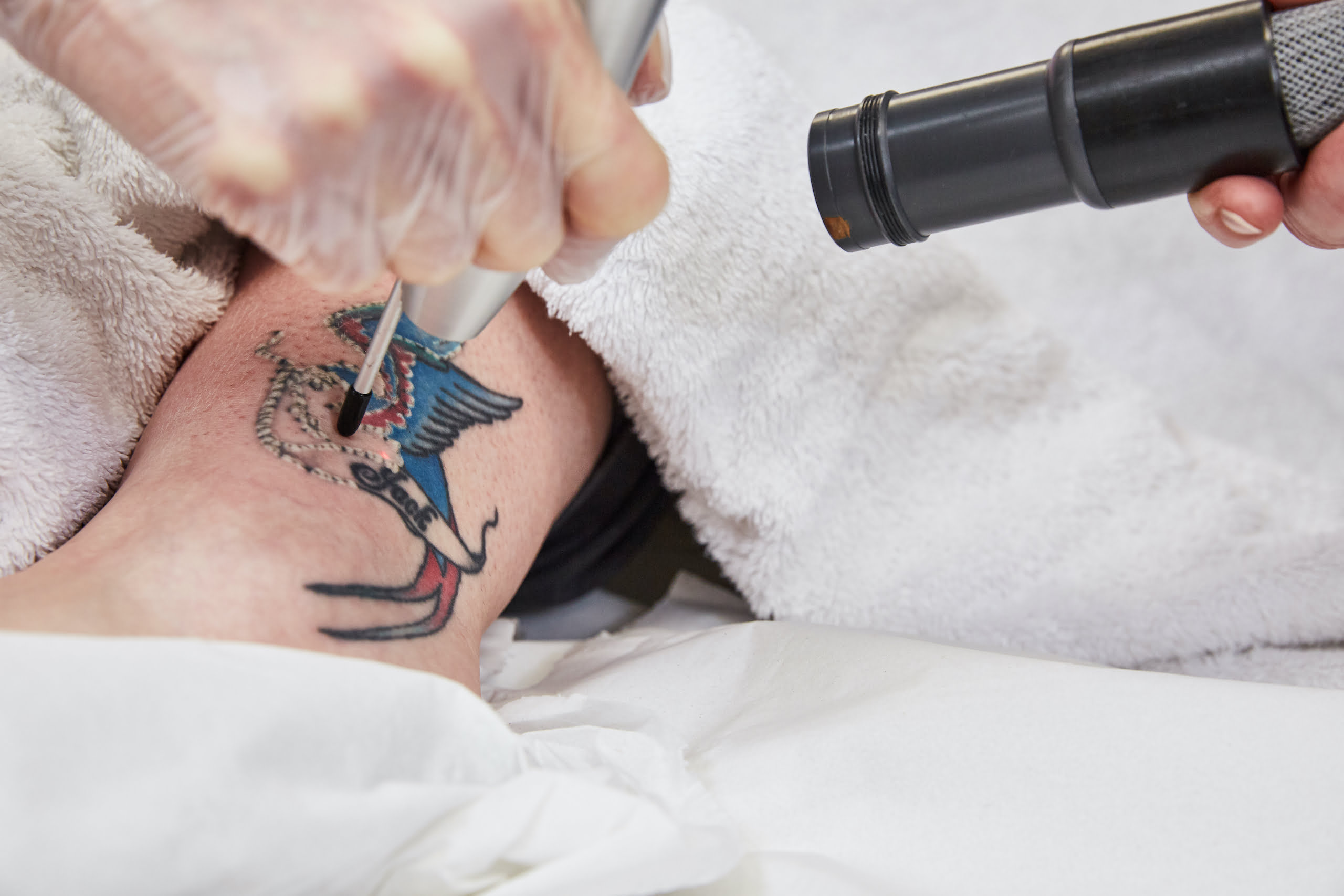
Understanding the Science of Tattoo Removal Lasers
Tattoo removal lasers work by targeting the ink particles in the skin. The laser emits a specific wavelength of light that is absorbed by the tattoo ink, causing it to shatter into smaller particles that the body can then eliminate.
1. Laser Wavelength and Ink Colors
Different laser wavelengths are effective for different ink colors. For example, a Q-switched Nd:YAG laser with a wavelength of 1064 nm is commonly used for black and dark blue inks, while a 532 nm wavelength is used for red, orange, and yellow inks. The choice of laser depends on the specific colors present in the tattoo.
2. How Lasers Break Down Tattoo Ink
The laser energy is delivered in short pulses, typically measured in nanoseconds or picoseconds. This rapid energy delivery causes the ink particles to heat up and fragment into smaller pieces. This process is known as selective photothermolysis, where the laser targets the ink without significantly damaging the surrounding skin tissue.
3. The Body's Role in Ink Removal
Once the ink particles are fragmented, the body's immune system, specifically macrophages, recognize and engulf these smaller particles. These macrophages then transport the ink particles through the lymphatic system, where they are eventually eliminated from the body. This process takes time, which is why multiple laser sessions are needed for complete tattoo removal.
| Laser Type | Wavelength (nm) | Effective Ink Colors |
|---|---|---|
| Q-switched Nd:YAG | 1064 | Black, dark blue |
| Q-switched Nd:YAG | 532 | Red, orange, yellow |
| Alexandrite | 755 | Green, blue |
| Ruby | 694 | Dark green, dark blue, black |
Data source: American Society for Laser Medicine and Surgery, 2024
The Best Ways to Remove Tattoos: Techniques and Technologies
Tattoo removal techniques have evolved significantly, offering more effective and safer options for those seeking to erase unwanted ink. Modern methods leverage advanced technologies to break down tattoo pigment with minimal skin damage.
1. Laser Tattoo Removal
Laser tattoo removal is the most common and effective method. It works by delivering short pulses of intense light that break down the tattoo ink into smaller particles. These particles are then naturally eliminated by the body's immune system. Different laser wavelengths target different ink colors, making it a versatile option. Multiple sessions are typically required for complete removal, and the number depends on the tattoo's size, color, and age.
2. Q-Switched Lasers
Q-switched lasers are a specific type of laser widely used for tattoo removal. These lasers emit very short pulses of high-energy light. This rapid energy delivery is crucial for shattering the tattoo ink without causing significant heat damage to the surrounding skin. Different Q-switched lasers, such as Nd:YAG, Alexandrite, and Ruby lasers, are used to target different ink colors effectively.
3. Picosecond Lasers
Picosecond lasers represent a newer advancement in tattoo removal technology. Compared to Q-switched lasers, picosecond lasers deliver energy in even shorter pulses – measured in picoseconds (trillionths of a second). This ultra-short pulse duration results in more efficient ink fragmentation and potentially fewer treatment sessions. Picosecond lasers are particularly effective on stubborn or multi-colored tattoos.
4. Surgical Excision
Surgical excision involves cutting out the tattooed skin and stitching the remaining skin together. This method is best suited for small tattoos. It is a more invasive procedure than laser removal and can result in scarring. However, it offers immediate and complete removal of the tattoo.
5. Dermabrasion
Dermabrasion involves using a rotating abrasive tool to sand down the outer layers of the skin, gradually removing the tattoo ink. This method is less precise than laser removal and can be painful. It also carries a higher risk of scarring and pigment changes in the skin. Dermabrasion is not as commonly used as laser tattoo removal due to its potential side effects.
Comprehensive Tattoo Removal Systems: What to Expect
Tattoo removal systems have evolved significantly, offering more effective and less invasive options. Understanding the process and what to expect is crucial for a successful outcome.
1. Initial Consultation and Assessment
The process typically begins with a consultation. A professional will assess your tattoo, considering factors like size, ink colors, location, and your skin type. They'll discuss the number of sessions likely required and potential outcomes.
2. Laser Tattoo Removal Process
Laser tattoo removal is a common method. It involves using focused light beams to break down the tattoo ink into smaller particles. These particles are then naturally eliminated by the body's immune system. Multiple sessions are needed, spaced several weeks apart, for optimal results.
3. Post-Treatment Care and Expectations
After each session, proper aftercare is vital. This includes keeping the treated area clean and protected from the sun. Expect some redness, swelling, or blistering, which usually subsides within a few days. Complete removal may not always be possible, and some fading or scarring could occur.
Preparation and Recovery: Ensuring Fast Tattoo Removal Results
Proper preparation and aftercare are crucial for optimizing tattoo removal results and minimizing potential side effects. These steps support the body's natural healing processes.
1. Pre-Treatment Instructions
Prior to laser tattoo removal, avoid sun exposure and tanning beds for at least four weeks. Tanned skin can increase the risk of complications such as hyperpigmentation or hypopigmentation. Shave the treatment area and avoid applying lotions, makeup, or sunscreen on the day of the procedure. Inform the technician about any medications or medical conditions you have.
2. Post-Treatment Care
Immediately after the treatment, apply a cold compress to the treated area to reduce swelling and discomfort. Keep the area clean and dry, and avoid scratching or picking at any blisters that may form. Apply a healing ointment recommended by your technician. Protect the area from sun exposure by wearing loose clothing or using a high-SPF sunscreen.
3. Lifestyle Adjustments
Certain lifestyle factors can impact the speed and effectiveness of tattoo removal. Staying hydrated, maintaining a healthy diet, and avoiding smoking can all contribute to better results. Smoking, in particular, can impair the body's ability to heal and clear the ink particles. Regular exercise can also improve circulation, aiding in the removal process.
Laser Tattoo Removal Methods: A Closer Look at Effectiveness
Laser tattoo removal has become a popular method for those seeking to erase unwanted ink. The effectiveness of these methods varies depending on several factors, including the tattoo's ink colors, size, location, and the individual's skin type.
1. Q-Switched Lasers
Q-switched lasers are considered the gold standard in tattoo removal. These lasers deliver short, powerful bursts of energy that break down the tattoo ink into smaller particles. These particles are then naturally eliminated by the body's immune system. Different Q-switched lasers target specific ink colors, such as the Nd:YAG laser for black and dark blue inks, and the Alexandrite laser for green inks.
2. Picosecond Lasers
Picosecond lasers represent a more advanced technology in tattoo removal. They deliver energy in ultra-short pulses, measured in picoseconds (trillionths of a second). This rapid delivery shatters the ink into even smaller particles compared to Q-switched lasers, potentially leading to faster and more effective removal, especially for resistant ink colors like blues and greens.
Q&A
Question 1: What are the primary methods for tattoo removal, and how effective are they?
Answer: The most common and effective method is laser tattoo removal, utilizing different laser wavelengths to target various ink colors. Surgical excision offers complete removal for small tattoos but carries a higher scarring risk. Dermabrasion and tattoo removal creams are less effective and may have significant side effects. Effectiveness varies depending on factors like tattoo size, age, ink color, and individual skin type.
Question 2: How does laser tattoo removal work, and what role does the body play in the process?
Answer: Laser tattoo removal uses short pulses of light absorbed by the tattoo ink, causing it to fragment into smaller particles. This process, called selective photothermolysis, targets ink without harming surrounding skin. The body's immune system, specifically macrophages, then removes these smaller ink particles through the lymphatic system. Multiple sessions are needed because this process takes time.
Question 3: What are the differences between Q-switched and picosecond lasers in tattoo removal?
Answer: Both Q-switched and picosecond lasers break down tattoo ink, but picosecond lasers deliver energy in even shorter pulses (picoseconds vs. nanoseconds). This results in more efficient ink fragmentation and potentially fewer treatment sessions, particularly for stubborn or multi-colored tattoos. Q-switched lasers are considered the gold standard, but picosecond lasers offer advancements in speed and effectiveness.
Question 4: What pre- and post-treatment care is crucial for successful tattoo removal?
Answer: Before treatment, avoid sun exposure for at least four weeks, shave the area, and inform the technician about medications. After treatment, apply cold compresses to reduce swelling, keep the area clean and dry, and use a recommended healing ointment. Protect the treated area from the sun with loose clothing or high-SPF sunscreen. Maintaining a healthy lifestyle, including hydration and avoiding smoking, also aids recovery.