
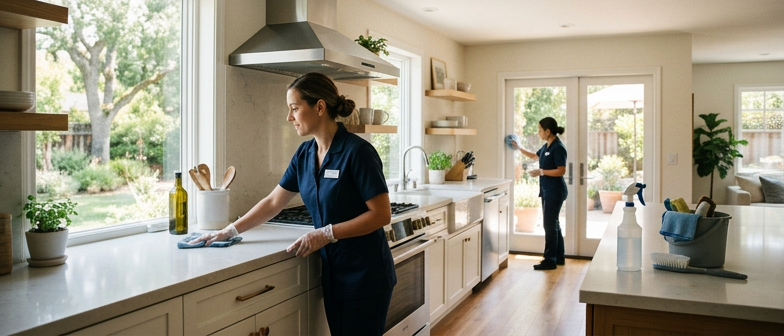
The Role of Professional Cleaning in Today’s Labor Market
Professional cleaning services are now a visible part of the modern labor market, shaping how offices, schools, hospitals, and homes operate each day. As employers pay more attention to health standards, liability, and productivity, they turn to trained cleaners instead of informal help. This shift turns background work into an organized service industry that generates many frontline jobs. For local workers, cleaning roles can provide an entry point into paid work, flexible shifts, and steady demand, making them a practical option for people balancing family care, study, or multiple part-time positions.
At the same time, the sector faces a persistent cleaning industry labor shortage, shifting cleaning jobs demographics, and ongoing debates over job quality. Employers struggle to fill night and physically demanding roles, even while many residents still need stable service work. A large share of the workforce includes women, older staff, and immigrant cleaning workers who may accept tough conditions yet gradually push for better protections. These pressures are forcing businesses and public institutions to rethink how they recruit, train, and keep staff, laying the groundwork for deeper discussions about wages, benefits, and what a sustainable cleaning workforce should look like.
Wages and Standards in Cleaning Work
Pay in professional cleaning spans office janitors, hotel housekeepers, and residential cleaners, and is shaped by minimum wage laws and local market pressures. Hourly rates often sit just above the legal floor, with modest increases for experience, nights or weekends, and added duties such as operating specialized equipment or supervising small teams. Even so, cleaning job wages commonly trail other service roles that demand similar physical effort and irregular schedules, keeping many workers below a genuine living wage standard.
Janitor wages in large commercial and institutional buildings are more likely to be set through collective bargaining, which can raise base pay, define clear wage scales, and add benefits like health coverage or paid sick leave. Where janitors are unionized, these contracts pull earnings closer to local living wage benchmarks and reduce some of the pay gaps inside the cleaning workforce. By contrast, housekeeper pay in hotels, short term rentals, and private homes is usually set one on one, often with per room or per shift systems that hide low effective hourly income once unpaid preparation, travel, or waiting time is counted.
Despite these protections, wage disparities across the cleaning sector remain wide, shaped by building type, subcontracting, and worker demographics. Immigrant cleaning workers, women, and racialized staff are heavily concentrated in the lowest paid roles, including informal jobs with weak enforcement of standards. This pattern feeds a broader labor shortage, as potential hires weigh demanding work against pay that still falls short of a sustainable wage, pushing clients and providers to improve transparency and raise standards if they want a stable workforce.
| Cleaning Role Type | Typical Pay Position vs Legal Minimum | Alignment with Local Living-Wage Benchmarks | Key Factors Shaping Wages | Overall Standards Assessment |
|---|---|---|---|---|
| Unionized commercial janitors | Slightly to clearly above minimum | Closer to living-wage cleaning jobs | Collective bargaining janitors, transparent wage ladders, benefits | Higher standards, more stable conditions |
| Non-union office janitors | Just above minimum | Often below living-wage level | Building contracts, subcontracting, limited bargaining power | Basic standards, uneven protections |
| Hotel and rental housekeepers | Per room or per shift near minimum | Frequently below living-wage benchmarks | Room quotas, unpaid prep and travel, irregular schedules | Pressure to rush work, hidden low hourly pay |
| Residential and informal cleaners | Highly variable, often near minimum | Commonly below sustainable income | Informal hiring, weak enforcement, immigrant cleaning workers | Lowest standards, high wage disparities |
How Policy and Regulations Shape Cleaning Pay
Public policy directly influences what professional cleaners earn, because minimum wage laws and service‑sector wage orders set the legal floor for pay and overtime. These rules interact with local living‑wage estimates, exposing the gap between what the law guarantees and what would qualify as a living‑wage cleaning job that actually covers rent, transport, food, and childcare. When statutory rates sit below basic living costs, employers may comply with regulations while cleaners still experience financial strain, so typical cleaning job wages end up trailing what workers say they need.
Regulation also shapes wage disparities across the cleaning sector, depending on how rules are enforced for building services, hotels, and home cleaning. Strong oversight of off‑the‑books work, accurate timekeeping, and penalties for misclassification can lift pay at the bottom and narrow gaps between contractors and in‑house staff. When enforcement is weak, some firms underpay overtime or ignore wage orders, which pushes down average compensation and widens inequalities, especially for immigrant cleaners already in low‑wage roles.
Unionization and Collective Power in Cleaning
In professional cleaning services, unions are a central mechanism for turning fragmented, low‑paid work into more stable employment. Unionized janitors use collective bargaining to negotiate contracts that set standards for pay scales, hours, and safety protections across buildings and contractors. This helps prevent a race to the bottom when property owners choose providers only on the lowest bid, and it links janitor wages more closely to the essential nature of the work rather than to how easily individual workers can be replaced.
Union contracts are strongly associated with higher pay and a better shot at a living wage in cleaning jobs. Agreements often lock in wage ladders that reward experience and specialized duties, while securing employer contributions to health insurance, pensions, or retirement plans. By setting minimum staffing levels, paid sick days, and overtime rules, unions also stabilize schedules and reduce chronic underemployment, so cleaners are less likely to juggle multiple part‑time roles simply to make ends meet.
Collective bargaining for janitors reshapes the broader labor market for cleaning work, influencing standards for housekeepers and other service staff in commercial and residential settings. As major agreements raise baseline pay and benefits, nonunion employers face pressure to keep up. This ripple effect can narrow wage gaps within the cleaning workforce and helps frame cleaning roles as legitimate long‑term careers, supporting a more sustainable and professionalized cleaning industry overall.
What Collective Bargaining Changes for Janitors
When janitors are covered by collective bargaining agreements, the most visible shift is in how wages and pay scales are set. Instead of supervisors informally deciding raises, unionized janitors work under transparent wage ladders that reward tenure, certifications, and higher risk shifts like overnight work. These contracts can push janitor wages closer to a living wage in expensive cities, reduce arbitrary gaps between worksites, and limit rock‑bottom starting rates that keep full‑time cleaners at poverty levels.
Union agreements also reshape daily conditions in professional cleaning services, which affects income stability. Contracts define minimum hours and predictable schedules, curb unpaid tasks such as off‑the‑clock setup, and set workload limits so one person is not covering multiple buildings for a single low rate. Health and safety clauses require training, protective gear, and protocols for hazardous materials, while negotiated steps into lead or supervisor roles create clearer paths toward more sustainable pay.
Who Cleans Our Spaces
Behind professional cleaning services are workers who are often older, female, and people of color, with many coming from immigrant communities. Cleaning jobs demographics show concentrations of newcomers who bring previous experience but face language barriers, limited credential recognition, and few alternative options that pay reliably. This helps explain why the sector has long relied on immigrant cleaning workers to staff late-night office crews, hotel housekeeping teams, and contracted janitorial services in commercial buildings. As other low-wage sectors raise pay or offer more stable schedules, fewer workers are willing to take physically demanding cleaning roles, contributing to a visible cleaning industry labor shortage across many building maintenance and housekeeping operations.
Because these workers are so often segregated by race, gender, and immigration status, pay and conditions vary sharply within the same industry. Wage disparities in the cleaning sector appear between contracted and in-house crews, union and nonunion buildings, and between high-income commercial districts and lower-profile worksites such as small offices or suburban facilities. Employers reacting to staffing shortages may raise entry wages for some posts while keeping others at or near the legal minimum, creating pockets of better pay without lifting standards across the board. For clients and policymakers, understanding who actually cleans offices, schools, hospitals, and homes is essential to any discussion of fair compensation, training, and safety in professional cleaning services.
Q&A
-
How do wages in professional cleaning compare with other service work?
Janitor and housekeeper wages usually sit just above the legal minimum, despite physical labor and night or weekend shifts. Many cleaning workers still earn less than people in other service jobs with similar effort, so a true living wage is uncommon. -
Why are so many cleaners immigrant workers?
Cleaning roles offer quick entry, steady demand, and few formal credentials. Newcomers, especially women and older people facing language or licensing barriers elsewhere, often accept these jobs despite low pay and slow advancement. -
What is behind the current labor shortage in cleaning jobs?
Other low‑wage sectors have raised pay or improved schedules, so fewer people take demanding cleaning work with irregular hours. Aging staff and high turnover add to the shortage in building maintenance and housekeeping. -
How does collective bargaining affect janitor wages and conditions?
Unionized janitors use collective bargaining to win wage ladders, night‑shift premiums, health and safety rules, and steadier hours. This reduces low‑ball contracting and can push typical janitor wages closer to local living‑wage levels. -
What does fair pay look like in the cleaning sector?
A fair structure links pay to experience, training, and riskier tasks, with starting rates at or above a calculated living wage. It narrows unjustified gaps between sites so full‑time cleaners can cover rent, transport, and childcare.