
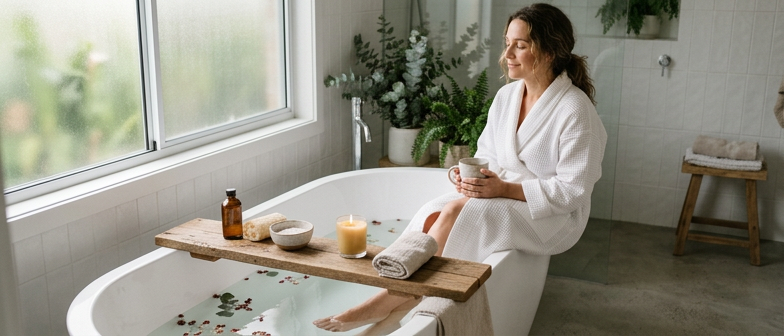
What a Home Spa Really Means
A home spa is not about recreating a full day-spa in your bathroom, but about turning everyday routines into small pockets of calm. Instead of driving across town searching online for stress relief near you, you bring the same intention of slowing down, breathing deeply and switching off your phone into your own space. Your shower, bath, or quiet corner becomes a place where lighting, scent, sound and touch work together to ease tension from work, commuting and family commitments, without needing professional equipment or a therapist.
This doesn’t replace professional body treatments or clinical care, but it helps you bridge the gap between appointments and manage stress safely at home. Borrowing the structure of spa-style body treatments, you might layer simple steps like a warm soak, a quick exfoliating scrub, a mindful self-massage with body oil and a few minutes of stretching, all adjusted to your comfort and health needs. A home spa is about realistic, low-pressure rituals you can repeat, choosing what genuinely feels good for your body and mind.
Planning a Spa Bathroom Remodel
A spa bathroom remodel starts with deciding what kind of home spa experience matters most, whether long soaking baths, steam‑style showers, or a calm corner for body treatments and skincare. Sketch how you move through the space now and note where it feels cramped, noisy or cold, then plan a layout with a clear pathway and a dedicated relaxation zone such as a bench, ledge or built‑in seat. Prioritise natural light and layered artificial lighting, so you can dim things down for unwinding yet still have bright, even light for grooming. Choose fittings like a deep bath, rainfall or dual shower heads, and a hand shower that can double as a tool for rinsing masks or scrubs, bringing some of the feeling of professional spa body treatments into your routine.
Alongside comfort, factor in practical details so the spa feel lasts. Good ventilation prevents mould, protects timber and paintwork, and keeps the room fresh; plan for an exhaust fan correctly sized to the room, and check any local building, plumbing and electrical rules before work begins. Water‑efficient taps, shower heads and toilets let you enjoy long showers or baths without a shock on your bill, while quality waterproofing, slip‑resistant flooring and safe power points around wet areas reduce accidents. Blending these basics with soothing colours and soft textiles turns the bathroom into a personal retreat, not just another renovation project.
| Checklist Item | Why It Matters | Priority Level | Notes for Home Spa Use |
|---|---|---|---|
| Map current bathroom flow | Reduces cramped, awkward movement | High | Helps place bench or relaxation corner |
| Plan dedicated relaxation zone | Creates clear spa-like focus | High | Ideal for body treatments and facials |
| Layer natural and artificial light | Supports grooming and unwinding | High | Allows bright task light and soft spa mood |
| Select spa-style fixtures | Adds daily luxury and comfort | Medium | Deep bath, rainfall or dual shower heads |
| Specify effective ventilation | Prevents damp, mould and odour | High | Choose an exhaust fan sized to room |
| Confirm codes and safety zones | Reduces legal and safety risks | High | Check building, plumbing and electrical rules |
| Use water-efficient fittings | Supports long soaks with lower impact | Medium | Choose efficient taps, showers and toilets |
| Add slip-resistant finishes | Lowers chance of falls when wet | High | Combine textured flooring with bath mats |
| Plan safe power point placement | Protects against shocks in wet areas | High | Keep sockets clear of splash zones |
| Select soothing colours and textiles | Strengthens calming atmosphere | Medium | Soft towels, mats and simple colour palette |
Creating a Spa-Like Atmosphere at Home
For a true spa bathroom remodel, focus on how the room feels to your senses, not just on new fixtures. Use soft, layered lighting with warm bulbs and a dimmer instead of one harsh ceiling light. Keep colours calm and cohesive with gentle neutrals or stone tones, and repeat them in towels, bathmats, and storage. Add texture through timber accents, woven baskets, and plush cotton or linen, balancing them with smooth stone, tile, or glass so the room feels quietly luxurious.
Think about the sound and scent you would normally look for when searching for nearby stress relief and bring that feeling home. Play low‑volume nature sounds or slow instrumentals from a small speaker and reduce household noise with closed or soft‑close doors. Choose one main fragrance in a candle or diffuser so the bathroom and hall feel like a single sanctuary, and keep air fresh so steam and products never overwhelm your senses.
Designing DIY Body and Facial Treatments
A home spa feels more luxurious when you borrow ideas from the best body treatments offered professionally, then simplify them for safety and comfort. Instead of copying every step of complex body treatments, build easy rituals you can repeat, such as a warm shower exfoliation followed by a nourishing body oil or lotion. If you are planning a spa bathroom remodel, design it to support these routines by adding a shower bench, dimmable lights or a handheld showerhead that makes rinsing scrubs and masks easier.
To echo the structure of a 60 minute facial at home, follow a short, predictable sequence. Use a gentle double cleanse suited to your skin, a mild exfoliant once or twice a week, a hydrating or clay mask, then a simple serum and moisturiser. When you want something closer to an indulgent 90 minute facial, keep the same basic products but slow everything down with relaxation: add a warm face cloth compress, a softer, longer facial massage with light oil, and extra mask time while you lie quietly and unwind.
Massage upgrades in day spas are usually small add ons such as scalp work, foot masks or warm towel compresses, and you can recreate these details in your home spa without special training. While DIY sessions cannot fully replace professional body treatments or clinical care, you can enhance a self care night by layering rich balm on feet and hands under cotton socks or gloves, resting with a warm towel over your neck and shoulders, and gently massaging your scalp or jaw with your fingertips. Keep pressure light, avoid injured or very sensitive areas, and see a qualified therapist for ongoing pain, skin problems or when you want more advanced techniques.
Structuring a 60 or 90 Minute At-Home Facial
To turn a quick cleanse into a 60 minute facial at home, move in slow, deliberate layers. Start with a double cleanse, taking time to melt makeup and sunscreen, then massage in your second cleanser to gently warm the skin. Follow with a few minutes of exfoliation, then apply a mask and lie down while it works, using the pause to breathe slowly and soften your shoulders. Finish with a simple facial massage using moisturiser or facial oil, sweeping from the centre of the face outward and down the neck so it feels like a mini massage upgrade you might add in a spa.
For a 90 minute facial, keep the same structure but stretch each stage and focus more on relaxation. Add a short steam from a warm shower or a bowl of hot water and a towel before masking to soften congestion, then linger over a longer facial massage. Alternate gentle lifting strokes with light pressure around the jaw, temples and scalp, always easing off if anything feels uncomfortable so the whole ritual feels like an unhurried home spa treatment.
When to Seek Professional Help Nearby
A home spa can be deeply relaxing, but it has limits. Consider looking for professional stress relief near you if you face ongoing insomnia, tension headaches, jaw clenching, or muscle pain that keeps returning even after hot baths, stretching, and simple body treatments at home. It is also worth booking a nearby body treatment when you notice issues you cannot safely handle yourself, such as stubborn knots across the shoulders, restricted movement in your neck or hips, or post‑exercise soreness that lasts more than a few days. In these situations, a trained therapist can assess what is happening under the surface and choose techniques, pressure levels, and treatment times that keep your home spa routine supportive rather than risky.
When you search for the best body treatments in your area, focus less on décor and more on qualifications, hygiene, and clear communication. Check that therapists hold recognised massage or beauty certifications, follow safe practice standards, and are insured. If a service offers advanced body treatments or strong exfoliation, they should explain possible side effects and after‑care in plain language. Prioritise venues that take a health history, ask about medications and injuries, and adjust pressure or products for sensitive skin or pregnancy. A good spa or clinic will treat your home spa as part of a wider wellbeing plan, suggest realistic visit frequency instead of pushing add‑ons, and encourage you to speak up about comfort, privacy, and boundaries.
Q&A
-
What does a home spa really mean compared with visiting a day spa?
A home spa is about turning daily routines into short, calming rituals using light, scent, sound, and touch, rather than recreating a full commercial spa experience. -
How should I start planning a spa bathroom remodel?
Map how you move through the room, fix cramped or noisy spots, then add a clear relaxation zone, layered lighting, and fittings like a deep tub or rainfall and hand shower. -
What simple upgrades create a spa‑like atmosphere at home?
Use warm dimmable lights, calm neutral colours, matching towels and storage, plus a mix of soft textiles and smooth stone or tile for a quietly luxurious feel. -
How can I design easy body treatments at home inspired by the best spa services?
Build repeatable rituals, such as a warm exfoliating shower followed by body oil, supported by a shower bench, handheld shower, and lighting you can lower to relax. -
How do I structure a 60 or 90 minute facial at home, and when should I see a professional instead?
Layer a double cleanse, brief exfoliation, mask time, then facial massage. Seek local stress‑relief or body treatment specialists if pain, tension, or insomnia keep returning.
References
- https://training.gov.au/Training/Details/SHBBBOS008
- https://www.healthdirect.gov.au/massage-therapy
- https://www.spasa.com.au/about-spasa
- https://ablis.business.gov.au/service/act/swimming-and-spa-pools-code-of-practice/3719
- https://www.ahpra.gov.au/Resources/Cosmetic-surgery-hub/Cosmetic-procedure-guidelines.aspx