
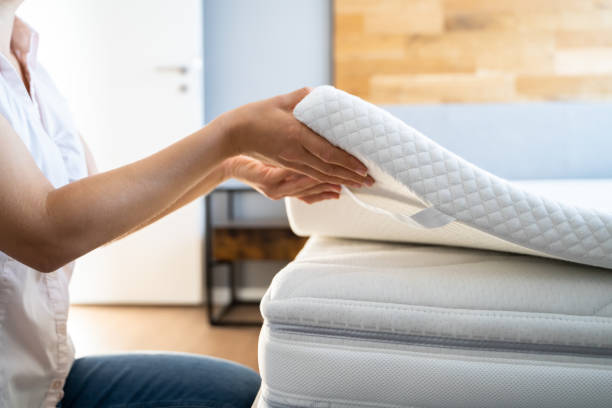
Understanding Mattress Types and Materials
When selecting a new mattress, it’s important to understand the different types available and the materials used, as these factors significantly impact comfort and durability.
Types of Mattresses
Innerspring Mattresses:
-
Constructed with metal coils for support.
-
Often topped with a layer of foam or padding.
-
Offers a traditional bounce feel. Key Considerations: Innerspring mattresses are generally more affordable and offer strong support. However, they can be less durable over time and may not provide sufficient pressure relief for all sleepers.
Memory Foam Mattresses:
-
Made from viscoelastic foam that contours to the body.
-
Offers excellent pressure relief and support.
-
Reduces motion transfer, making it ideal for couples. Key Considerations: Memory foam mattresses are great for those needing pressure relief and motion isolation. However, they can retain heat and may not be suitable for hot sleepers.
Latex Mattresses:
-
Made from natural or synthetic latex.
-
Provides a responsive and supportive feel.
-
Naturally hypoallergenic and durable. Key Considerations: Latex mattresses are durable and offer a supportive, yet bouncy feel. They are ideal for those seeking a natural option but can be more expensive.
Hybrid Mattresses:
-
Combines innerspring coils with foam or latex layers.
-
Offers the benefits of both support and comfort.
-
Designed to provide a balanced sleep experience. Key Considerations: Hybrid mattresses are versatile and provide a mix of support and comfort. They can be pricier, but often justify the cost with enhanced features.
Assessing Mattress Quality
-
Material Quality: Look for high-density foams and durable coil systems.
-
Comfort and Support: Ensure the mattress provides adequate support for your spine and joints.
-
Durability: Consider the expected lifespan based on materials used.
-
Trial Periods and Warranties: These offer security and the ability to test the mattress at home.
Comparison of Mattress Types
Below is a table comparing different mattress types, their price ranges, and the relationship between cost and benefits.
|
Mattress Type
|
Price Range
|
Pros
|
Cons
|
|---|---|---|---|
|
Innerspring
|
$300 -$1,000
|
Affordable, good support
|
Less durable, can be noisy
|
|
Memory Foam
|
$400 -$1,500
|
Excellent pressure relief, motion isolation
|
Heat retention, off-gassing
|
|
Latex
|
$700 -$2,000
|
Durable, responsive, hypoallergenic
|
High cost, heavy
|
|
Hybrid
|
$600 -$2,500
|
Balanced support and comfort
|
Expensive, heavy
|
Tips for Choosing the Right Mattress
-
Consider Sleeping Position: Side sleepers often benefit from softer mattresses, while back and stomach sleepers may need firmer support.
-
Assess Firmness Levels: Choose a firmness level that supports your body type and sleeping style.
-
Evaluate Motion Isolation: Important for couples, especially if one partner is a light sleeper.
-
Check Temperature Regulation: Essential for hot sleepers to prevent overheating.
FAQs
What is the best mattress for back pain?
Memory foam and latex mattresses often provide the best support and pressure relief for back pain sufferers.
How often should I replace my mattress?
Most mattresses should be replaced every 7-10 years, though this can vary based on quality and wear.
Can a mattress affect my health?
Yes, an unsupportive mattress can lead to poor sleep quality and exacerbate back or joint pain.
Are expensive mattresses worth the investment?
Higher-priced mattresses often offer better materials and construction, which can enhance comfort and durability.
What is the importance of a mattress trial period?
Trial periods allow you to test the mattress in your own home to ensure it meets your comfort needs.
How do I maintain my mattress?
Regularly rotate the mattress, use a protective cover, and ensure proper support from your bed frame.
Selecting the right mattress involves understanding your personal needs, evaluating the quality and materials, and considering budget versus benefits. With the right choice, you can enjoy restful sleep and improved health.