
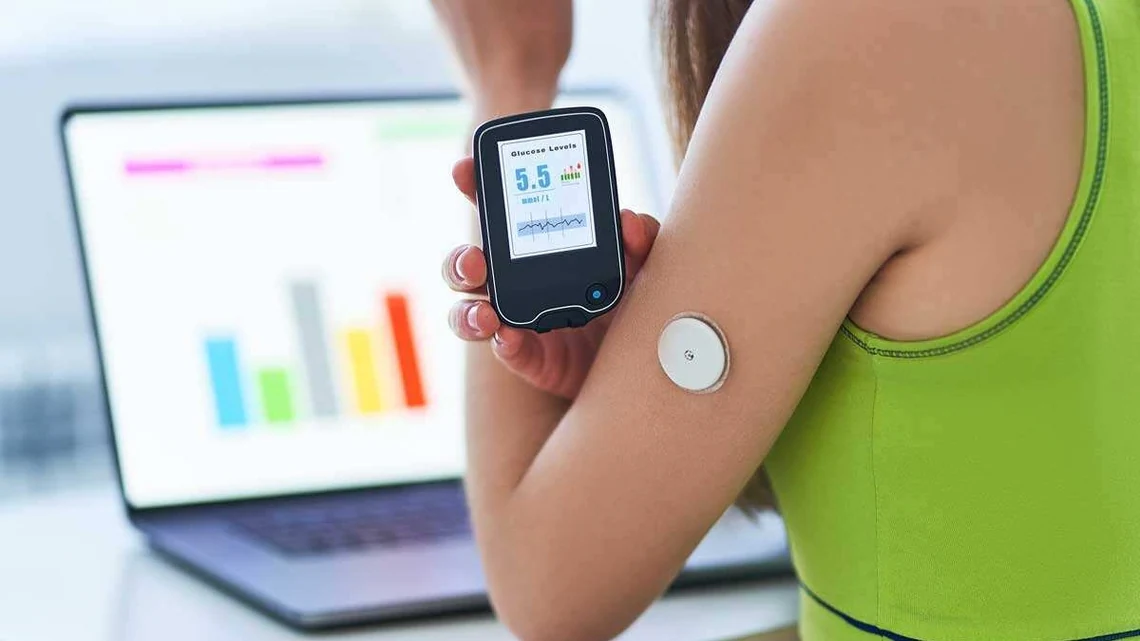
Understanding Continuous Glucose Monitoring: How It Works
Continuous Glucose Monitoring (CGM) systems have revolutionized diabetes management by providing real-time glucose readings. Unlike traditional finger-prick testing, CGMs offer a continuous stream of data, empowering users to make informed decisions about their diet, exercise, and medication.
1. Sensor Insertion and Function
A small sensor is inserted under the skin, typically on the abdomen or upper arm. This sensor measures the glucose levels in the interstitial fluid, which surrounds the cells. The sensor is usually replaced every 7 to 14 days, depending on the specific CGM system.
2. Data Transmission
The sensor wirelessly transmits glucose data to a receiver or a compatible smartphone. This data is displayed in real-time, providing users with a dynamic view of their glucose levels. Many systems also offer trend arrows, indicating the direction and rate of glucose change.
3. Real-Time Glucose Readings and Alerts
CGM systems provide glucose readings every few minutes, offering a comprehensive picture of glucose fluctuations throughout the day and night. Users can set customizable alerts to notify them when their glucose levels are too high or too low, allowing for proactive intervention.
4. Data Analysis and Reporting
CGM systems store glucose data, allowing users and healthcare providers to analyze trends and patterns over time. This information can be used to optimize diabetes management plans, including adjusting medication dosages and lifestyle choices. Reports can be generated to track progress and identify areas for improvement.
| Feature | Description |
|---|---|
| Sensor | Measures glucose levels in interstitial fluid. |
| Transmitter | Sends data wirelessly to receiver or smartphone. |
| Receiver/App | Displays real-time glucose readings and trends. |
| Alerts | Notifies user of high or low glucose levels. |
| Data Analysis | Tracks glucose patterns and trends over time. |
Data source: Mayo Clinic, 2024
Comparing Leading CGM Devices: Features and User Experiences
Continuous Glucose Monitors (CGMs) have revolutionized diabetes management, offering real-time glucose data and trends. This section compares leading CGM devices, focusing on their features and user experiences.
1. Dexcom G7
The Dexcom G7 is known for its accuracy and user-friendly design. It features a fully disposable, pre-assembled applicator, making insertion easier. The sensor lasts for 10 days, with a 30-minute warm-up period. Users appreciate its compatibility with smartphones and smartwatches, providing convenient glucose monitoring. The Dexcom G7 also offers customizable alerts and alarms.
2. Abbott FreeStyle Libre 3
The Abbott FreeStyle Libre 3 is the smallest and thinnest CGM sensor available. It provides continuous glucose readings sent automatically to a smartphone every minute. The sensor lasts for 14 days and does not require fingerstick calibration. Users highlight its ease of use and discreet design. The FreeStyle Libre 3 app offers detailed glucose insights and reports.
3. Medtronic Guardian 4
The Medtronic Guardian 4 is integrated with Medtronic insulin pumps for automated insulin delivery. It requires twice-daily fingerstick calibrations during the first day of use. The sensor lasts for 7 days. Users benefit from its seamless integration with Medtronic's smart insulin pens and pumps. The Guardian 4 system can predict glucose levels and adjust insulin delivery accordingly.
4. Eversense E3
The Eversense E3 CGM features an implantable sensor that lasts for up to 6 months. It requires a simple in-office procedure for insertion and removal. The sensor transmits data to a smart transmitter worn on the upper arm. Users value its long-term wear and reduced need for frequent sensor changes. The Eversense E3 app provides glucose data and alerts.
The Economic Impact of CGMs: Costs, Insurance, and Accessibility
Continuous glucose monitors (CGMs) have revolutionized diabetes management, but their economic implications, including costs, insurance coverage, and accessibility, remain significant considerations for patients and healthcare systems.
1. Direct Costs of CGMs
The initial and ongoing costs of CGMs can be substantial. These costs include the CGM device itself, disposable sensors that need frequent replacement (typically every 7-14 days), and potentially a compatible smartphone or receiver. The price of sensors can vary depending on the brand and the duration of use. Patients may also incur costs related to training and education on how to use the CGM effectively.
2. Insurance Coverage and Reimbursement
Insurance coverage for CGMs varies widely depending on the insurance provider, the specific plan, and the patient's diabetes type and treatment regimen. Some insurance plans may fully cover CGMs for individuals with type 1 diabetes, while others may require prior authorization, have high deductibles, or limit coverage. Coverage for individuals with type 2 diabetes who are not on intensive insulin therapy is often more restricted, although this is gradually changing with increasing evidence of CGM benefits.
3. Long-Term Cost Savings
Despite the upfront costs, CGMs can lead to long-term cost savings by improving glycemic control and reducing the risk of diabetes-related complications. Better glucose management can decrease the likelihood of emergency room visits, hospitalizations for severe hypoglycemia or hyperglycemia, and the development of chronic complications such as neuropathy, nephropathy, and retinopathy. A study published in 2024 found that CGM use was associated with a 25% reduction in hospitalizations for diabetes-related complications over a five-year period.
4. Accessibility and Affordability
Accessibility to CGMs is influenced by factors such as insurance coverage, geographic location, and socioeconomic status. Individuals with limited financial resources or those living in underserved areas may face significant barriers to accessing this technology. Patient assistance programs offered by CGM manufacturers and initiatives aimed at increasing insurance coverage can help improve affordability and accessibility.
5. Impact on Healthcare Systems
The widespread adoption of CGMs has implications for healthcare systems. While the initial investment in CGM technology may be significant, the potential for reduced hospitalizations and improved long-term health outcomes can translate into cost savings for healthcare providers and payers. Furthermore, the data generated by CGMs can inform clinical decision-making and facilitate more personalized diabetes management strategies.
| Cost Component | Estimated Annual Cost (USD) |
|---|---|
| CGM Device | 500 - 1,000 |
| Sensors (per year) | 2,000 - 4,000 |
| Training and Education | 100 - 500 |
Data source: American Diabetes Association, 2024.
Technological Advancements in CGMs and Their Benefits for Diabetes Management
Continuous Glucose Monitors (CGMs) have revolutionized diabetes management by providing real-time glucose readings. Recent technological advancements have further enhanced their accuracy, convenience, and functionality, leading to improved glycemic control and quality of life for individuals with diabetes.
1. Improved Sensor Technology
CGM sensor technology has significantly advanced, leading to greater accuracy and reliability. Newer sensors utilize advanced materials and miniaturization techniques, resulting in more consistent and precise glucose readings. These improvements reduce the need for frequent fingerstick calibrations, making CGMs more user-friendly.
2. Enhanced Data Analysis and Connectivity
Modern CGMs offer sophisticated data analysis capabilities, providing users with detailed insights into their glucose trends. These devices can track glucose levels, identify patterns, and predict potential hyperglycemic or hypoglycemic events. Wireless connectivity via Bluetooth allows seamless data transfer to smartphones, tablets, and cloud-based platforms, enabling remote monitoring by healthcare providers.
3. Integration with Insulin Delivery Systems
One of the most significant advancements is the integration of CGMs with insulin pumps to create automated insulin delivery (AID) systems, also known as "artificial pancreas" systems. These systems use sophisticated algorithms to automatically adjust insulin delivery based on real-time glucose readings, minimizing the risk of hypoglycemia and hyperglycemia. Studies have shown that AID systems can significantly improve glycemic control and reduce the burden of diabetes management.
4. Miniaturization and Comfort
CGM devices are becoming smaller, more discreet, and more comfortable to wear. Manufacturers are focusing on developing smaller sensors and more flexible adhesives to minimize discomfort and skin irritation. These improvements enhance user adherence and promote long-term CGM use. The discreet nature of newer devices also reduces the stigma associated with diabetes management.
Q&A
Question 1: What are the key components of a Continuous Glucose Monitoring (CGM) system, and how do they function together?
Answer: A CGM system typically includes a sensor inserted under the skin to measure glucose in interstitial fluid, a transmitter sending this data wirelessly, and a receiver (or smartphone app) displaying real-time glucose levels and trends. Alerts notify users of high or low glucose, and data analysis tools track patterns over time for improved diabetes management.
Question 2: How do the leading CGM devices (Dexcom G7, Abbott FreeStyle Libre 3, Medtronic Guardian 4, and Eversense E3) compare in terms of sensor duration, calibration requirements, and integration with other devices?
Answer: The devices vary significantly. Dexcom G7 and Abbott FreeStyle Libre 3 offer longer sensor durations (10 and 14 days respectively) and require minimal to no calibration. Medtronic Guardian 4 integrates with Medtronic insulin pumps but requires daily calibration initially. Eversense E3 boasts a 6-month sensor lifespan but requires in-office insertion and removal and twice-daily calibration.
Question 3: What are the major cost factors associated with using a CGM, and how does insurance coverage typically impact accessibility?
Answer: CGM costs include the device itself, sensor replacements (a significant recurring expense), and potentially training. Insurance coverage varies widely; type 1 diabetes patients often receive better coverage than type 2 patients. High deductibles, prior authorization requirements, and limited coverage can create significant financial barriers for many individuals.
References:
- https://www.healthline.com/health/diabetes/best-glucose-monitors
- https://www.goodrx.com/conditions/diabetes-type-2/dexcom-vs-freestyle-libre
- https://ihealthlabs.com/products/ihealth-gluco-wireless-smart-glucose-monitor
- https://www.globenewswire.com/news-release/2025/05/30/3091108/0/en/Continuous-Glucose-Monitoring-Devices-Market-Size-expected-to-reach-US-32-97-billion-by-2031-Increasing-Demand-for-Effective-Diabetes-Management-Propels-Growth.html
- https://www.towardshealthcare.com/insights/continuous-glucose-monitoring-devices-market-sizing