
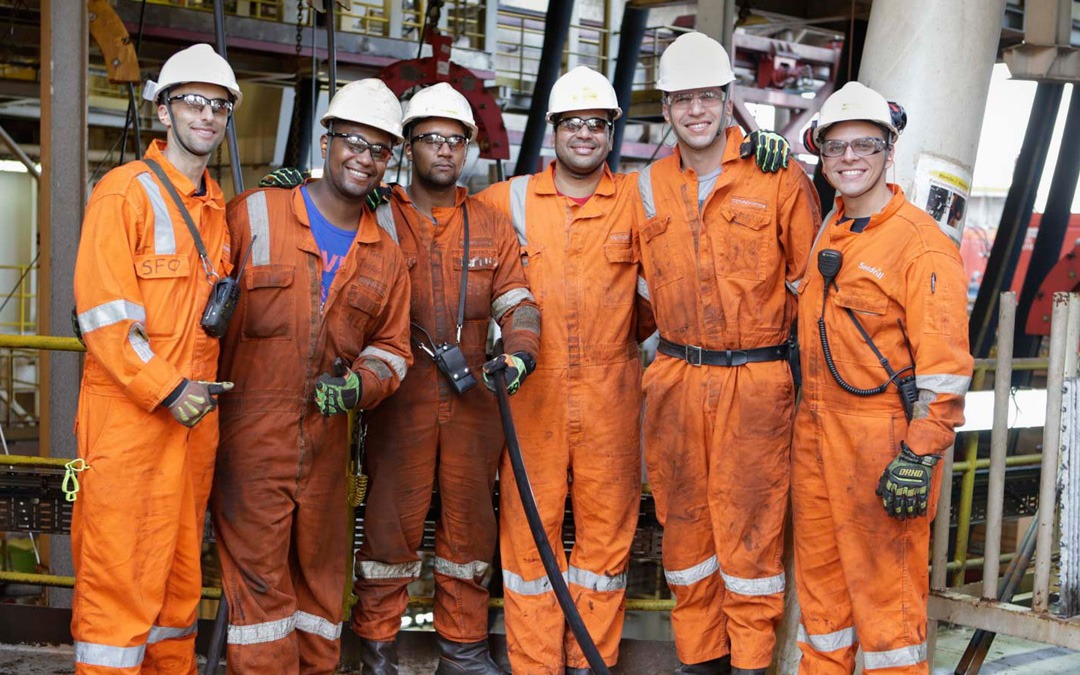
Life in the Vertical Village
The Sensory Shock of the Steel Island
Approaching an offshore installation by helicopter or crew boat offers a perspective that few outside the industry ever witness. As the transport draws closer, the sheer scale of the structure becomes overwhelming—a "city of iron" rising defiantly from the water. For a newcomer, the first step onto the rig is a sensory overload. The environment is almost entirely metallic, a stark contrast to the organic world left behind on shore. The floor often consists of heavy-duty grating; looking down through the gaps to see the churning ocean hundreds of feet below can induce a moment of vertigo, a visceral reminder of the isolation that defines this workplace.
This space is a marvel of efficiency where every square foot has a purpose. Living quarters, galleys, recreation rooms, and the massive drilling package are interlocked like a complex three-dimensional puzzle. There is no wasted space, and silence is a foreign concept. The background hum of power generators, the rhythmic thud of the drill floor, and the howling wind create a constant industrial soundtrack. Yet, rather than being a nuisance, this noise generates a unique sense of solidarity. Everyone on board understands they are part of a critical mission in a hostile environment. The air, heavy with the scent of rusted iron and salt spray, fills the lungs of workers who operate not as individuals, but as precision cogs in a massive, relentless machine.
The Twelve-Hour Rhythm and Galley Culture
Time on a rig moves differently than it does on land. The standard schedule revolves around a "hitch," typically consisting of a 14-day or 21-day rotation where crews work 12 hours on and 12 hours off. In this 24-hour operation, the rig never sleeps; as one shift racks out in their bunks, the other is keeping the bit turning. The concept of days of the week quickly evaporates, replaced by a simple count of how many days remain in the rotation. It is a grueling cycle that demands peak physical and mental conditioning, with safety protocols acting as the strict governing law of the land.
However, the rigidity of the work schedule is balanced by the absolute freedom of the off-hours. With a commute that involves walking down a hallway, workers have twelve full hours to decompress. The moment the coveralls come off and the shower washes away the grease, the switch flips. Without the distractions of grocery shopping, traffic, or running errands, crew members can dedicate their downtime entirely to themselves—whether that means hitting the gym, studying for certifications, or simply reading.
Central to this lifestyle is the "Galley," the rig’s cafeteria. Food is the primary morale booster offshore. Catering companies compete to provide high-quality, buffet-style meals available around the clock to accommodate both day and night shifts. The food is nutritious and varied, but more importantly, the galley serves as the social hub. It is where the hierarchy softens slightly, where jokes are exchanged, and where the crew bonds over steak nights or fresh pastries. Combined with laundry and cleaning services provided by stewards, the rig lifestyle removes all domestic burdens, allowing the crew to focus 100% on the job and their recovery.
| Feature | Onshore Routine | Offshore Rig Lifestyle |
|---|---|---|
| Commute | Daily traffic, unpredictable delays, fuel costs. | A two-minute walk from bunk to drill floor. |
| Domestic Duties | Cooking, cleaning, laundry, grocery shopping. | 100% catered: meals prepared, laundry done by stewards. |
| Social Environment | Broad network of family, friends, and public interactions. | Tight-knit, isolated "work family"; intense bonding. |
| Work-Life Separation | Blurred lines; bringing work home or checking emails. | Absolute separation; 12 hours on, 12 hours off. |
| Distractions | High; errands, media, consumerism. | Low; focus on work, fitness, and personal study. |
The Climb from Deck to Control Room
Earning Stripes in the Greenhand Phase
Every career in the offshore sector begins with a test of character. Newcomers, often referred to as "Greenhands" or "Roustabouts," start their journey on the deck, performing the most physically demanding and unglamorous tasks. This phase is less about technical proficiency and more about demonstrating situational awareness and respect for the environment. The ocean does not forgive mistakes, and a greenhand’s primary job is to absorb the safety culture that keeps everyone alive.
During these early hitches, the ability to listen and execute instructions precisely is valued far above raw ambition. Senior crew members watch the new recruits closely, looking for those who can anticipate the next move rather than waiting to be told. The deck is a dynamic, dangerous environment where heavy machinery swings overhead and slick surfaces threaten footing. Textbook knowledge is rarely enough; the "street smarts" of the rig are learned through observation and sweat. Those who prove they can work hard without complaining, maintain safety standards when tired, and watch their buddy’s back are the ones who get tapped for advancement. It is a meritocracy in its purest form—if you can’t handle the deck, you will never touch the brake handle.
The Specialist Track and Mentorship
Once a worker has proven their reliability, the path opens toward specialization. The transition from a general laborer to a skilled technician or driller is akin to a medieval apprenticeship. Knowledge on a rig is tribal; it is passed down from veteran mentors to eager protégés through hands-on practice. A driller doesn’t just learn to operate the console from a manual; they learn the "feel" of the formation through the vibrations in the floor and the subtle fluctuations on the gauges, guided by a senior peer standing over their shoulder.
This phase of the career requires a shift in mindset. It is no longer enough to just follow orders; one must understand the why behind the operation. Whether moving into subsea engineering, crane operations, or electrical maintenance, the specialist must develop a panoramic view of the rig’s operations. They must understand how their specific machinery interacts with the rest of the plant. Promotions are earned not just by technical skill, but by coolness under pressure. When an alarm sounds or a hydraulic line bursts, the specialist is expected to diagnose and resolve the issue instantly. This rigorous selection process ensures that by the time a worker reaches a senior position, they are a master of their craft, capable of managing complex systems in the middle of the ocean.
The Hidden Mechanics of Recruitment
Navigating the Invisible Job Market
While job boards and corporate websites are the visible tip of the iceberg, the true recruitment engine of the offshore industry churns below the surface. A significant portion of hiring, especially for high-value projects, happens through an "invisible market." When a new drilling campaign is greenlit or a rig comes out of cold stack, the demand for personnel spikes instantly. However, before a job is ever posted publicly, rig managers and superintendents are already working their phones.
In this tight-knit community, a referral is the golden ticket. Because the work requires living in close quarters under high pressure, hiring managers prioritize known quantities. A recommendation from a trusted crew member—"I worked with him in the Gulf, he’s solid"—carries more weight than a perfectly formatted résumé. This makes networking crucial. For those looking to break in or move up, attending industry town halls, maintaining contacts from previous hitches, and staying visible in professional networks is essential.
Furthermore, there is a fierce, quiet war for white-collar specialists who never touch a drill pipe. Headhunters are constantly hunting for experts in contracts, risk allocation, and regulatory compliance. These roles involve designing the complex joint operating agreements that define the legal structure of a project. The ability to navigate changing maritime laws and financial assurance requirements is a rare skill set. Recruitment for these roles is surgical; headhunters target specific individuals who understand the intersection of maritime law, engineering constraints, and commercial strategy.
The Golden Handcuffs: Salary vs. Burnout
The financial allure of offshore work is undeniable. The potential to earn a year's worth of "onshore" salary in six months is the primary hook that draws people to the industry. However, these paychecks include a "hardship premium" that accounts for more than just labor. The money pays for missed birthdays, empty seats at holiday dinners, and the psychological toll of isolation.
"Golden Handcuffs" is a term often used to describe the trap where the lifestyle becomes dependent on the high income, making it impossible to leave despite the mounting personal cost. Burnout is a genuine threat. The physical fatigue of 12-hour shifts accumulates over years, but the emotional strain is often what breaks a career. Returning home can be jarring; while the worker was freezing on a platform in the North Atlantic, life at home moved on without them. Children grow, spouses develop their own routines, and the returning worker can sometimes feel like a guest in their own house.
Successful long-term career planning in this sector involves an exit strategy or a strict discipline regarding mental health. The smart money isn't just spent; it's invested to buy freedom later. The industry is rewarding, but it demands a transaction: your time and presence in exchange for financial acceleration. Understanding this trade-off before stepping onto the chopper is the only way to survive the cycle without burning out.
| Factor | The Pull (Advantages) | The Push (Challenges) |
|---|---|---|
| Financial | Accelerated earnings; ability to save roughly 50% of the year due to no expenses while working. | "Golden Handcuffs" trap; lifestyle inflation makes it hard to return to standard wages. |
| Career Velocity | Rapid promotion based on merit; clear path from unskilled to specialist roles. | Physically punishing; high risk of injury or long-term wear on the body. |
| Recruitment | strong "who you know" culture rewards loyalty and reputation. | High barrier to entry for outsiders without connections; "invisible" job market. |
| Psychological | Pride in accomplishing difficult tasks; strong camaraderie and brotherhood. | "Burnout syndrome"; feeling disconnected from family; difficulty adjusting to shore life. |
Q&A
-
What trends will shape entry-level oil rig worker salary in 2026?
Entry-level pay will likely be driven by global oil prices, safety and certification requirements, automation skill needs, and competition with other blue-collar sectors, leading to higher base pay plus stronger bonus and rotation packages. -
How do offshore drilling contractor recruitment strategies attract U.S. candidates?
Contractors are focusing on shorter hitches, better safety records, clear promotion paths, and relocation assistance, while using virtual assessments and skills testing to speed hiring without compromising standards. -
What role do offshore engineering headhunters play in specialized hiring?
They map niche talent globally, discreetly approach passive candidates, benchmark compensation, and advise on relocation, visas, and project-based contracts, reducing mis-hires in critical subsea and structural roles. -
How is remote oil field specialist hiring changing in the petroleum industry?
More diagnostics and monitoring roles are now remote, so hiring emphasizes data interpretation, digital tool proficiency, and cross-time-zone communication, often using fully virtual interview and technical-test pipelines. -
What should companies expect from modern petroleum industry staffing solutions?
They can expect integrated services: workforce planning, on-demand crews, compliance support, safety and skills training, and analytics on turnover and pay competitiveness across offshore and onshore positions.