
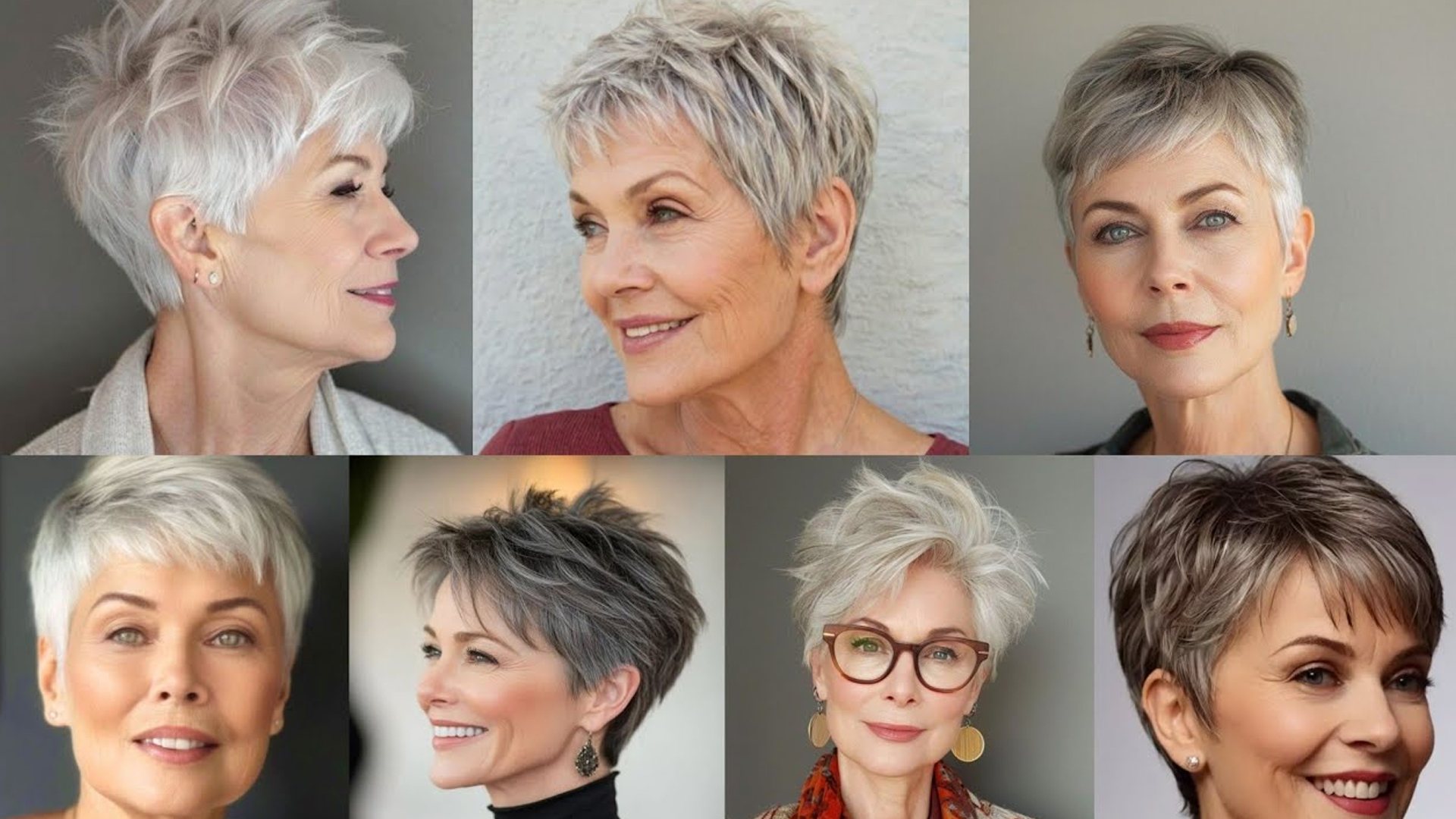
Why Letting Go of Length Can Feel So Refreshing
Rethinking “long equals youthful”
Many women carry an old rule in the back of their minds: as long as hair stays long, youth is still hanging on. Real life rarely agrees. As strands thin, ends dry out, or blowouts eat up energy, long hair can turn from signature to burden. Choosing a shorter cut gently breaks that rule. Instead of clinging to length, attention shifts to shine, movement, and expression. Cheekbones, jawline, and eyes step into focus while hair becomes a frame, not the main event. That shift feels freeing because it’s less about chasing a younger version and more about letting today’s face look its best.
The lightness you can actually feel
There’s a physical relief in cutting off extra inches. Heavy lengths, long blow‑dry sessions, and constant styling can subtly strain neck, shoulders, and scalp. When weight disappears, many women describe it as taking off an invisible backpack. Shorter hair usually needs less product, less heat, and far less time. Mornings turn into quick, repeatable routines: a gentle brush‑through, a touch of cream or spray, and out the door. Air hits the neck, collars feel easier, and turning your head or putting on glasses stops being a tangle. The scalp often feels cleaner and calmer too, because products rinse away more easily and brushing is faster and gentler.
Hair as a mirror of who you are now
Haircuts often stay stuck in old chapters: the rushed‑parent ponytail, the corporate “safe” blowout, the long waves from a different decade. Those styles can quietly clash with who you are now. A thoughtfully chosen short shape can line up with your current life. A textured crop might reflect a looser, bolder outlook; a soft, swingy bob might match a mix of polish and ease. With less length, it becomes simpler to play—switching the part, adding a light fringe, going a bit shorter at the back. Style stops being a museum version of you and starts matching your present‑day energy and boundaries.
Finding a Shape That Flatters Your Features
How length reshapes the face
On shorter cuts, every centimeter counts. Ear‑skimming crops pull focus to eyes and cheekbones, giving a lifted, alert look. Chin‑grazing shapes shift attention toward the jawline and smile, great for anyone who likes their profile or wants a little structure. Letting ends fall just below the jaw softens a stronger chin, especially when tips are slightly curved rather than blunt. The back matters too: a gently rounded, slightly shorter neckline makes the whole head look fuller and the neck longer. When choosing length, think less about age and more about where you want the eye to land first—eyes, cheekbones, lips, or jaw.
Fringes that soften or sharpen without stealing the show
Bangs don’t have to be a heavy curtain. Think of them as a soft‑focus filter you can tune. Wispy, light fringe barely covering part of the forehead blurs a strong hairline without hiding brows or eyes and grows out gracefully. Side‑swept pieces create a diagonal line that slims wide foreheads, softens square faces, and pulls attention to cheekbones. Shorter, airy bangs that skim the brows sharpen the gaze and make eyes pop, especially when edges are slightly irregular instead of ruler‑straight. For finer or silver hair, keeping the fringe zone narrower and lighter prevents the top half of the face from feeling weighed down.
Partings that quietly redraw balance
The part costs nothing to change and can completely shift the vibe. A center part feels calm and balanced, ideal when features are already fairly symmetrical. A soft side part instantly creates a “best side,” giving more volume to one half of the face and allowing the other to stay cleaner and slimmer. Slightly zigzagged or broken parts disguise uneven hairlines and add lift at the roots, especially helpful when strands have thinned. “Invisible” parts—where hair simply falls with a gentle lean—work beautifully on natural wave or texture, keeping everything soft, airy, and low‑effort while still flattering the face.
| Face Focus | Helpful Length & Fringe Mix | Vibe |
|---|---|---|
| Eyes & cheekbones | Ear‑skimming crop, soft side fringe, subtle side part | Bright, lifted, modern |
| Jawline & neck | Chin‑length bob, light layers, center or soft off‑center part | Defined yet gentle |
| Softer lower face | Below‑chin bob, wispy fringe, broken side part | Balanced, quietly slimming |
| Fuller cheeks | Slightly longer crop, height at crown, longer temple pieces | Elongated, open |
Choosing among these isn’t about rules; it’s about which combination makes your reflection feel most like you on a very good day.
Pixies, Crops, and Bobs: What Really Fits a Busy Life
Pixie confidence: bold yet surprisingly practical
A well‑cut pixie can be the biggest visual change and the easiest to live with. Closely shaped sides and back keep the outline neat, while a bit of length on top adds softness and volume where hair may have thinned. Fine hair often looks instantly fuller at this length, because there’s no heavy weight dragging it flat. Styling can be as simple as drying with fingers and pressing a pea‑sized dab of cream through the crown. The trade‑off: regular trims to keep edges clean. For anyone unsure about going very short, a slightly longer pixie with side‑swept fringe offers the same freshness with a bit more coverage.
Grown‑out crops and pixie‑bobs
Between an ultra‑short cut and a full bob, there’s a sweet middle: the pixie‑bob. The nape stays shaped and tidy while the top and sides are allowed to lengthen. This stage can feel chic rather than “awkward” when layers are placed thoughtfully around the cheekbones and neck. Shorter pieces underneath keep bulk from building up, while longer surface layers add swing and softness. A quick tousle with lightweight mousse or spray can turn it into an easy, textured style. Because the back remains shorter, maintenance is simpler than it looks, and the whole shape reads as modern and intentional.
Soft, flattering bobs
Once hair reaches bob territory, things often settle into a very livable rhythm. Chin‑length versions gently trace the jaw, adding a bit of structure without looking severe. Slight graduation at the back shapes the head and keeps the neckline from feeling heavy. Wavier textures shine in softly layered bobs that create a rounded, cloud‑like outline rather than a stiff triangle. Straight hair benefits from subtle inward or outward bends at the ends for movement. Framing pieces near the cheeks or collarbones work like built‑in contouring, drawing attention upward and softening transitions between face, jaw, and neck.
| Everyday Priority | Pixie | Pixie‑Bob | Soft Bob |
|---|---|---|---|
| Fastest drying | ★★★ | ★★☆ | ★★☆ |
| Least frequent trims | ★★☆ | ★★☆ | ★★★ |
| Most styling options | ★★☆ | ★★★ | ★★★ |
| Easiest hat / scarf days | ★★★ | ★★☆ | ★★☆ |
Looking at your own schedule—exercise, travel, mornings on the go—often makes one of these stand out as the most realistic match.
Working With Silver and Texture Instead of Fighting Them
Letting natural color take the lead
Silver, white, or salt‑and‑pepper tones can look striking in shorter shapes. Layers break up solid patches so color looks like intentional dimension instead of “half grown‑out dye.” Cropped cuts show off how silver catches light, almost like built‑in highlights. Rather than burying that shine under heavy color, gentle glosses or subtle blending shades can soften contrast if desired. Moisture matters: when silver hair is hydrated, light bounces off smoothly and lines around the face look softer. Lightweight creams or balms that add sheen without greasiness are often all it takes to make natural color feel luxurious.
Letting texture be the star
Texture usually shifts with age—straight hair gains a hint of wave, curls loosen or tighten, and almost everyone sees more dryness. Shorter styles can turn those changes into assets. Wavy hair loves jaw‑length bobs and layered crops that give each bend room without piling up bulk. Curls often look their best in rounded, layered cuts that allow coils to form small, defined clusters instead of one big puff. Fine, straight hair gains structure from shorter, stacked shapes that lift at the crown without tons of product. When the cut works with the way your hair wants to move, “bad hair days” become rarer and easier to fix.
Keeping It Easy: Care and Styling Habits That Actually Stick
A routine that stays under ten minutes
Low maintenance doesn’t mean no maintenance; it means simple steps you’ll really do. For most short cuts, that can be: a gentle cleanse when needed, pat‑drying with a soft towel, then shaping hair while it’s still slightly damp. Using your hands to set the part and direction, then either air‑drying or giving roots a quick blast with a dryer, is usually enough. A tiny amount of styling cream, mousse, or wax on the ends adds polish. The key is repetition: same motions, same products, so muscle memory takes over and your hair almost “styles itself” every morning.
Small habits that make short hair cooperate
A few quiet choices keep short cuts looking good with less effort. Sleeping on a smoother pillowcase reduces friction, so you wake up with fewer wild flips. Brushing or combing gently from ends upward prevents breakage, which shows quickly on shorter hair. Spacing washes according to how your scalp behaves—not out of habit—helps control dryness or extra oil. Occasional tiny trims to clean up neckline and fringe preserve the shape so styles grow out gracefully rather than suddenly collapsing. When hair care fits easily into the life you already live, the cut stops being a project and starts feeling like support.
Q&A
- Which low-maintenance short hairstyles for older women work better for an active lifestyle?
Low-maintenance short hairstyles for older women include cropped pixie cuts, wash-and-go shaggy bobs, and softly layered cuts that air-dry well. These styles need minimal products, quick trims every 6–8 weeks, and simple finger-styling. -
How can women over 50 choose modern short hairstyles that still look chic and age-appropriate?
Modern short hairstyles for women over 50 balance clean structure and softness. Opt for chic short haircuts with side-swept bangs, light layers around the face, and contemporary coloring like soft balayage or gray blending to keep the look fresh, not harsh. - Are pixie cuts for older women suitable for all face shapes, and how can they be customized?
Pixie cuts for older women can suit most face shapes when tailored correctly. Round faces benefit from added height on top, square faces from soft side-swept bangs, and longer faces from slightly fuller sides, making the cut both chic and personalized.