
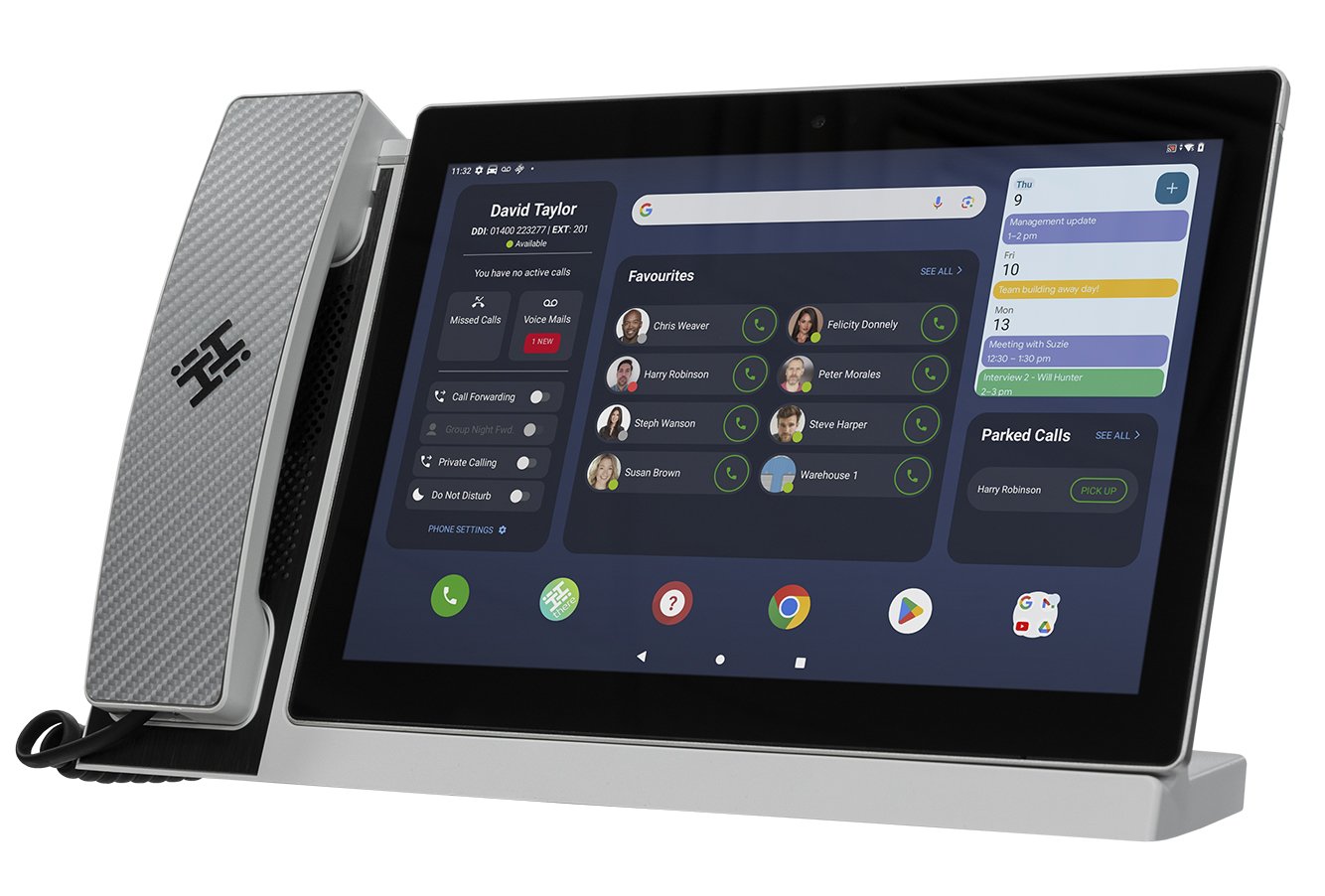
1.Business Phone Systems: What Are They and Why Are They Important?
Business phone systems are communication networks specially designed to handle the needs of organisations, whether small or large. Unlike personal phone lines, these systems include advanced features tailored to enhance team collaboration, streamline workflows, and improve customer service. They can handle multiple calls simultaneously, route calls efficiently, and integrate with other business tools.
1.1 Core Features of Business Phone Systems
Modern business phone systems offer a range of features that go beyond simply making and receiving phone calls:
-
VoIP Technology: Enables voice communication over the internet, reducing costs and improving call quality.
-
Interactive Voice Response (IVR): Automates call routing, ensuring customers reach the right department.
-
Video Conferencing: Facilitates virtual meetings and collaboration across teams.
-
Call Forwarding and Routing: Ensures calls are never missed, even when employees are working remotely.
-
Voicemail-to-Email Transcription: Converts voicemail messages into text and sends them to email for convenience.
-
CRM Integration: Synchronises customer data for better relationship management.
1.2 Why Business Phone Systems Are Essential
-
Enhanced Efficiency: Automating call management reduces manual workload.
-
Cost Savings: VoIP systems significantly cut down on international call costs and maintenance expenses.
-
Improved Customer Satisfaction: Faster response times and better call routing create positive customer experiences.
-
Remote Work Compatibility: Mobile and cloud-based systems allow employees to stay connected no matter where they are.
2. Types of Business Phone Systems
Business phone systems are not one-size-fits-all. The right system depends on the size of the business, its communication needs, and its budget.
2.1 Traditional Landline Systems
-
Operate on public switched telephone networks (PSTNs).
-
Highly reliable but lack advanced features like video conferencing or CRM integration.
-
Best suited for businesses in areas with limited internet connectivity.
2.2 VoIP (Voice over Internet Protocol) Systems
-
Use the internet to transmit voice calls.
-
Offer advanced features like call analytics, video conferencing, and mobile app support.
-
Cost-effective, especially for businesses making frequent international calls.
2.3 Virtual Phone Systems
-
Rely entirely on the cloud and are managed through mobile or desktop apps.
-
Ideal for small businesses or startups with no need for physical office phones.
2.4 Hybrid Systems
-
Combine landline and VoIP technologies for businesses transitioning to digital communication.
-
Provide flexibility by offering traditional reliability alongside modern features.
3. Advantages of Modern Business Phone Systems
3.1 Cost-Effectiveness
Traditional landline systems can be expensive to maintain, with high costs for international calls and hardware upgrades. VoIP and cloud-based systems eliminate these expenses:
-
Lower Call Costs: Internet-based calls are significantly cheaper than traditional ones.
-
No Maintenance Fees: Cloud systems require no physical infrastructure, reducing maintenance costs.
3.2 Scalability
As businesses expand, so do their communication needs. Modern phone systems allow companies to add new lines, users, or features with minimal effort and cost.
3.3 Flexibility for Remote Work
The rise of hybrid and remote work models has made flexibility a priority:
-
Employees can use mobile apps to access their business phone lines from anywhere.
-
Video conferencing bridges the gap between remote and in-office teams.
3.4 Improved Customer Interaction
-
Call Routing: Ensures customers are directed to the appropriate department without unnecessary delays.
-
CRM Integration: Provides customer data in real-time, allowing employees to personalise interactions.
3.5 Advanced Analytics
Business phone systems can track metrics like call duration, missed calls, and customer satisfaction, helping businesses identify areas for improvement.
4. Competitor Comparison
4.1 Leading Providers of Business Phone Systems
|
Provider
|
System Type
|
Key Features
|
Cost
|
Best For
|
|
RingCentral
|
Cloud-based VoIP
|
Video conferencing, mobile app integration
|
£20/month/user
|
Remote teams and growing SMEs
|
|
BT Business
|
Landline & VoIP
|
Reliable connection, hybrid solutions
|
£30/month/line
|
Established enterprises
|
|
Grasshopper
|
Virtual Phone System
|
Voicemail transcription, call forwarding
|
£25/month/user
|
Startups and small businesses
|
|
Vonage
|
VoIP
|
CRM integration, scalability
|
£15/month/user
|
Businesses focused on growth
|
4.2 VoIP vs Traditional Landline
|
Aspect
|
VoIP System
|
Traditional Landline
|
|
Cost
|
Lower operational costs
|
Higher installation and maintenance costs
|
|
Scalability
|
Easily scalable
|
Requires physical upgrades
|
|
Features
|
Advanced (e.g., video conferencing)
|
Basic functionality
|
|
Flexibility
|
Accessible from anywhere
|
Limited to physical locations
|
5. Features to Look for When Choosing a Business Phone System
5.1 Essential Features
-
VoIP Technology: For cost savings and flexibility.
-
Call Analytics: To track performance and improve customer service.
-
CRM Integration: For streamlined customer relationship management.
-
Call Forwarding: Ensures no missed calls, even during off-hours.
5.2 Advanced Features
-
Video Conferencing: For virtual meetings.
-
AI-Powered Call Routing: Directs calls to the correct department automatically.
-
Mobile App Support: Allows employees to manage calls on the go.
6. Challenges of Business Phone Systems
6.1 Internet Dependency
-
VoIP systems rely on stable internet connections. Poor connectivity can lead to dropped calls and reduced call quality.
6.2 Cybersecurity Risks
-
Internet-based systems are vulnerable to hacking and data breaches. Businesses must choose providers with robust encryption and security protocols.
6.3 Initial Costs for Transition
-
While cloud systems reduce long-term costs, transitioning from traditional systems may require a significant upfront investment in training and equipment.
7. Q&A
Q: What is the best business phone system for a small business?
A: Systems like Grasshopper or RingCentral are ideal for small businesses due to their affordability and scalability.
Q: Can I use my business phone system for remote work?
A: Yes, most modern systems, especially VoIP and cloud-based ones, offer mobile apps and remote access.
Q: Are business phone systems secure?
A: Reputable providers use encryption and secure authentication processes to protect communication data.
Q: How much does a business phone system cost?
A: Costs vary by provider and features but typically range from £15-£30 per user/month.
Q: Can I integrate a business phone system with other tools?
A: Yes, many systems integrate with CRM platforms, analytics tools, and project management software.
Business phone systems are no longer optional—they are critical for organisations aiming to enhance communication, improve customer service, and support remote work. With options ranging from traditional landlines to advanced VoIP and cloud-based systems, businesses can find a solution tailored to their needs. By carefully evaluating features, costs, and scalability, companies can invest in a system that will empower their teams and drive future growth.